Faculty-in-charge: Dr. Aradhana Basu
Students: BSc SD third year (Anshika Abhinanda, Hemant Kumar Singh, Pratik Kumar Saha, Priyanshu Parida, Siba Prasad Das, Sneha Parimita Swain, Supreet Padhi)
Date: 07.10.2026
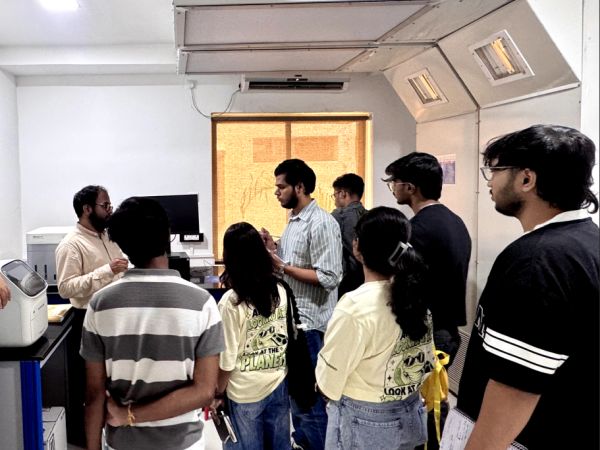
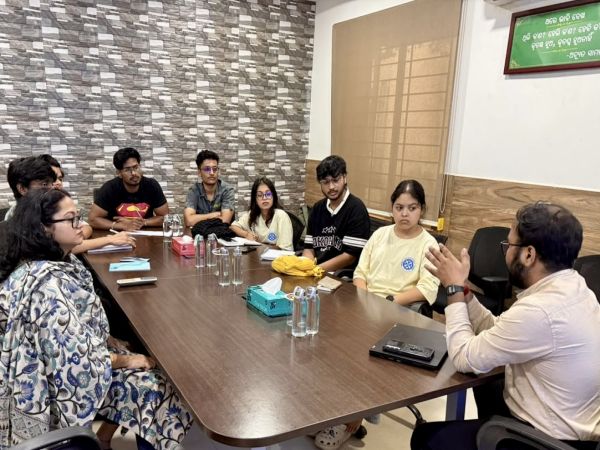
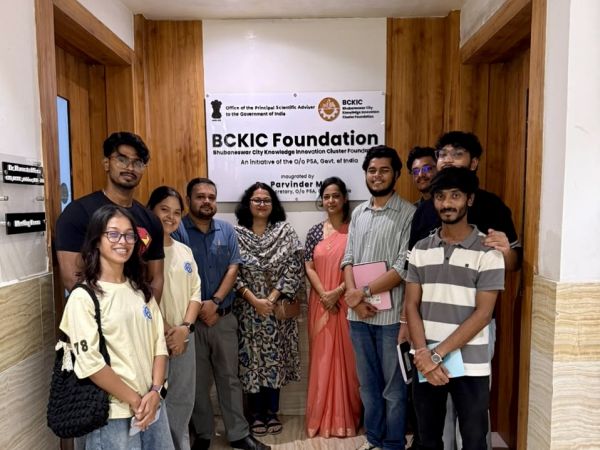
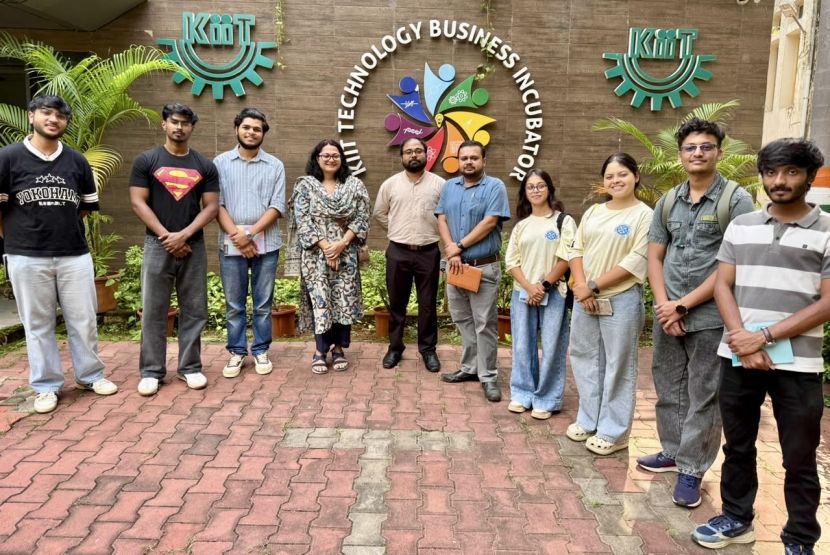
The educational visit to the KIIT Technology Business Incubator (KIIT-TBI), organized on 7 October 2026 for the Environmental Instrumentation course, by faculty member Dr. Aradhana Basu, provided third-year BSc SD students (EVS specialization) with valuable practical exposure to scientific research, advanced instrumentation, bioprocessing, and innovation-driven entrepreneurship. The visit was coordinated by the faculty to help students bridge classroom theory with practical, industry-standard applications in environmental science and biotechnology. Upon arrival, the students were welcomed by Dr. Ananyo Jyoti Misra, Senior Manager at the Instrumentation Facility, KIIT-TBI. The welcome was followed by an initial roundtable introduction and a discussion, which set the context for the visit. A key highlight was the opportunity to observe KIIT-TBI’s operational framework, which demonstrated how incubation centers foster innovation and entrepreneurship by nurturing early-stage startups and providing the infrastructure and mentorship needed to transform scientific research into commercially viable environmental solutions. The visit also created an opportunity to explore potential academic and research collaborations with BCKIC (Bhubaneswar City Knowledge Innovation Cluster) through interaction with Dr. Namrata Mishra, CEO of BCKIC, particularly in the areas of environmental biotechnology, advanced instrumentation, applied research, and student training. The students and faculty extend their sincere gratitude to Dr. Namrata Mishra, CEO of BCKIC; Dr. Ananyo Jyoti Misra, Senior Manager at the Instrumentation Facility; and Soumya Biswas, Manager of Bioprocess at KIIT-TBI, for sharing their expertise and making this an enriching learning experience. Overall, the visit deepened students’ understanding of how research facilities and technological advancements contribute to practical applications in the environmental and biotechnology sectors.
Key Learning Outcomes
The visit provided a thorough exploration of advanced technological facilities, offering students valuable insights into several critical domains:
(i) Advanced Instrumentation and Scientific Research: Students gained firsthand exposure to cutting-edge laboratory equipment, developing a practical understanding of how high-precision instruments are operated for complex environmental data collection and analysis.
(ii) Bioprocessing Applications: The tour highlighted scalable bioprocessing techniques, demonstrating how biological materials and systems are engineered to solve contemporary environmental challenges and drive sustainable practices.
(iii) Innovation and Entrepreneurship: By observing the operational framework of KIIT-TBI, students learned how business incubation centers nurture early-stage startups, providing the necessary infrastructure and mentorship to transform scientific research into commercially viable environmental solutions.